3281 E. Guasti Rd, STE 700, Ontario, CA 91761
1712 9th Ave SW, Watertown, SD 57201

A security rule that crews bypass to keep a job moving isn’t protecting the project. Creating a culture of cybersecurity in the workplace means building practical habits around the way construction teams work, from office email and project files to phones and other devices in the field.
Tight schedules leave little room for security steps that feel confusing or slow. When office and jobsite teams use different tools, everyone needs a clear way to spot and report suspicious messages or activity. This article covers how to make secure routines repeatable without disrupting the workday, including how leadership, staff awareness, reporting procedures, and construction-focused IT support can help.
• Creating a culture of cybersecurity in the workplace starts with identifying the project information, devices, and workflows that need protection.
• Set practical rules for owners, supervisors, office staff, and field teams so everyone knows what to do in their role.
• Make suspicious activity easier to report by naming the right contact and reinforcing the process during routine work.
• Pair staff awareness with construction-focused managed cybersecurity support. Contact Trinity Networx, LLC to discuss your construction technology needs.
Construction work depends on information moving between people, devices, and locations. A project file may be reviewed in the office, opened on a mobile device in the field, then updated by someone coordinating work from a jobsite. Each handoff can create confusion if teams don’t follow the same security practices. Creating a culture of cybersecurity in the workplace means making protection part of routine decisions, not a task reserved for training day.
Cybersecurity culture is the shared daily practice of protecting construction systems and information so project work can continue. It shows up in how staff handle devices, files, messages, and access to work systems. Information security awareness also recognizes human behavior as part of an organization’s approach to protecting information.
Consider a supervisor opening project documents on a phone between site tasks, or an office coordinator sending updated plans to a field team. These routine actions need clear expectations: which devices staff may use, which tools are approved for sharing files, and how people should access work accounts. Jobsite connectivity matters too. Employees need to know which networks and tools are intended for business use.
Gaps often appear when responsibilities change or reporting routes are unclear. For example, a former employee or a worker moving to a different project may retain access if no one owns access updates. A crew member who doesn’t know where to forward a suspicious message may simply delete it or respond. Set an owner for access changes, name a contact for reports, and explain the process during project onboarding. Construction-focused IT planning can align office systems and field connectivity with the way each team works. Trinity Networx provides IT services for commercial construction, including technology planning shaped around construction operations.
When secure actions fit the work, crews are more likely to follow them consistently. Trinity Networx provides cybersecurity support for construction businesses.
Security guidance works best when it fits the pace and sequence of construction work. Build it into existing processes, then review it when project procedures or technology change. The aim is not more paperwork. It is a short, dependable set of expectations people can follow without stopping to interpret a policy.
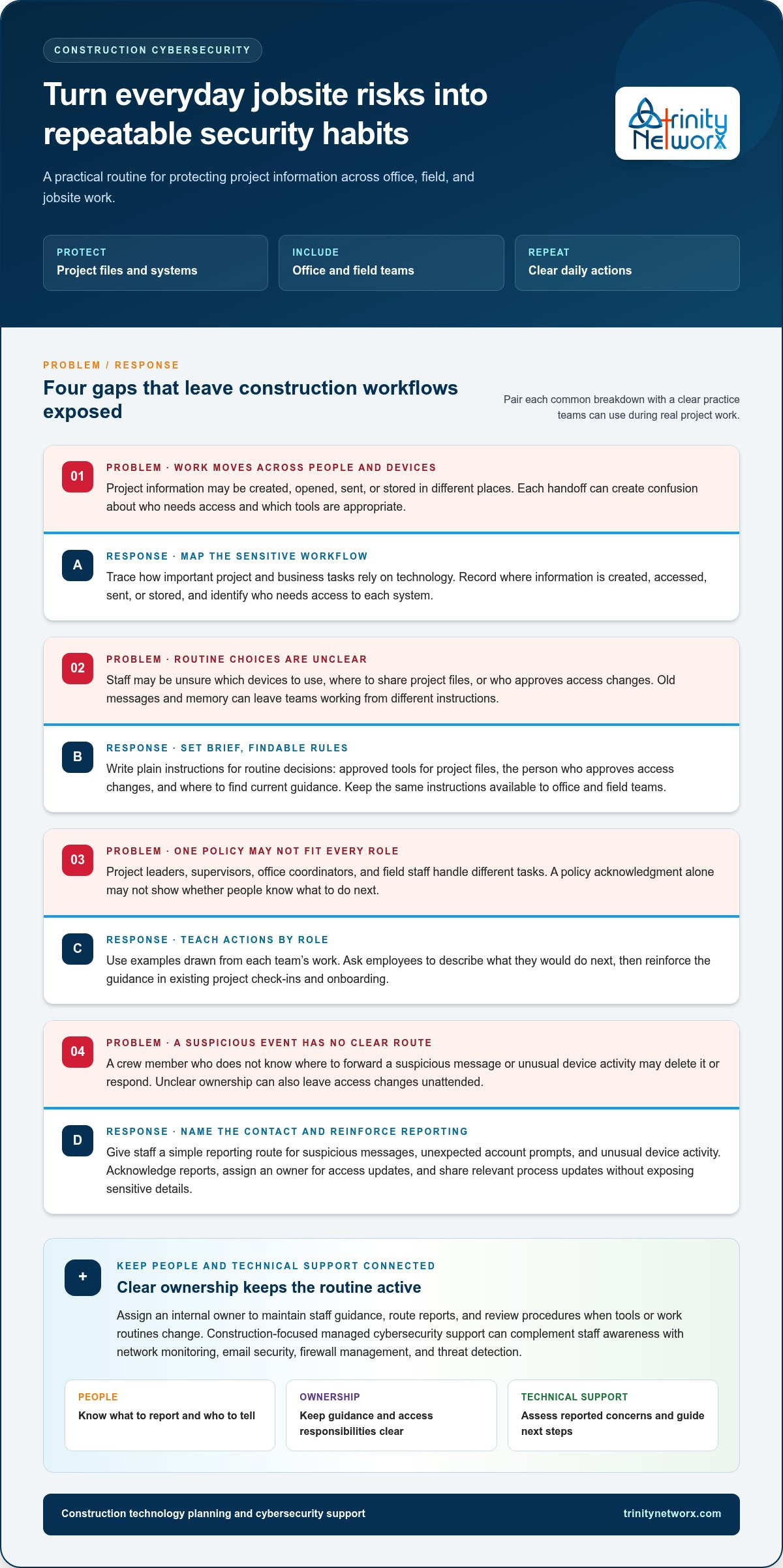
Trace how important project and business tasks rely on technology. Note where teams create, access, send, or store information, and identify who needs access to each system.
Write brief instructions for routine decisions, such as which tools to use for project files, who approves access changes, and where staff can find current guidance.
Use examples drawn from the work of project leaders, supervisors, office teams, and field staff. Ask employees to describe what they would do next, rather than relying on a policy acknowledgment alone.
Give staff a simple route to report suspicious messages, unexpected account prompts, or unusual device activity. Acknowledge reports and share relevant process updates with the team.
Map the work, set plain rules, teach each role, and keep the reporting path clear. Owners can establish priorities, supervisors can include a short security reminder in existing project check-ins, and employees can apply the guidance to their assigned tasks. Assigning responsibility by role prevents the common gap where everyone assumes someone else is handling it.
Keep instructions easy to find and consistent across crews and offices. A supervisor should be able to refer to the same current guidance as an office coordinator, rather than relying on memory or an old message. For projects with teams in California, Nevada, Arizona, and Utah, consistent procedures can help staff follow the same expectations across locations. Construction-focused IT services can align technology planning with the way teams carry out work in the office and in the field.
The National Institute of Standards and Technology (NIST) publishes cybersecurity resources that can inform an organization’s practices. Use relevant guidance as a reference, then translate it into clear actions employees can apply to their roles.
Trinity Networx helps construction businesses shape technology planning and security practices around their operations.
Good habits can fade when no one keeps them visible. Assign an internal owner to maintain staff guidance, route reports to the right people, and review procedures when project tools or work routines change. That owner does not need to resolve every technical issue. They do need to know who handles technical support and how to pass along concerns from office and field teams.
Make the process concrete: name a contact for suspicious messages, decide who will communicate updates to staff, and review access and security practices regularly. After a report, share useful lessons without exposing sensitive details. Employees are more likely to speak up when reporting leads to a clear response rather than blame or silence.
Construction-focused IT support can align technical safeguards with the tools crews and office staff use to exchange project information. Managed cybersecurity support can complement staff awareness with network monitoring, email security, firewall management, and threat detection. The goal is coordination: employees know what to report, and technical support can assess the issue and guide next steps. Trinity Networx provides managed cybersecurity services for business systems and security practices.
Creating a culture of cybersecurity in the workplace takes ongoing attention. Leaders set expectations, employees follow practical habits and report concerns, and technical specialists help keep protections aligned with changing construction workflows. Review the approach when teams, systems, or project processes change, so guidance stays useful instead of becoming a document no one checks.
Trinity Networx provides construction-focused IT planning and cybersecurity support. Contact the Trinity Networx team to discuss your technology needs.
Construction work changes as projects move through phases, teams shift, and technology needs evolve. Set a regular time to review whether security practices still fit the work. Are reporting contacts clear? Can staff follow device and information-handling expectations without unnecessary delays? Use the answers to update guidance before small gaps become routine.
Creating a culture of cybersecurity in the workplace isn’t a one-time rollout. It grows when leaders keep expectations visible and employees can raise concerns with confidence. Managed technical support adds oversight through network monitoring. Trinity Networx’s Southern California network operations centre monitors networks continuously, supporting construction businesses across California, Nevada, Arizona, and Utah.
Keep the next step clear: contact the Trinity Networx team to discuss construction cybersecurity and the technical support that fits your operations. Practical habits and informed support help your people protect project information while keeping work moving.
Set a training schedule that reflects job roles and the tools employees use, rather than relying on a single session. Give new hires guidance before they handle company systems, and add focused instruction when a project platform or work process changes. Keep a record of completed training and note topics that need follow-up, so future sessions address actual gaps.
Yes. Include relevant subcontractor representatives in project kickoff discussions about shared technology and communication practices. Agree on how teams will identify current project updates, and name a contact for questions when instructions appear inconsistent. Record these arrangements in project onboarding materials so expectations remain available after kickoff and apply across the firms involved.
Pause before acting on an email that requests an unusual payment, account change, schedule revision, or urgent approval. Construction teams receive frequent project and vendor messages, so a familiar name alone doesn’t prove a request is genuine. Verify the request through an established contact method already on file, and alert the manager responsible for the affected transaction or project decision.
Use brief practice scenarios to see whether employees can make sound decisions without prompts. For example, present a mock request to change a vendor’s payment details and ask staff how they would verify it. Note where people hesitate, provide coaching, then repeat the exercise. The results can show whether the guidance is clear enough to use under pressure.

Article by
Lance Reichenberger, Ph.D.., J.D. (Candidate)
Dr. Lance Reichenberger is the founder of Trinity Networx, a Southern California technology firm specializing in managed IT services, cybersecurity, network infrastructure, and business technology strategy. With nearly four decades of experience in the IT industry, he works with businesses to improve operational efficiency, strengthen security, and align technology with long-term growth objectives.
Lance focuses on proactive IT management, enterprise wireless infrastructure, cybersecurity integration, and scalable technology solutions for growing organizations throughout Southern California.
The content published on this website is provided for general informational and educational purposes only. Articles may be created, edited, or enhanced with the assistance of artificial intelligence and automation tools under the direction and review of Trinity Networx. While every effort is made to ensure accuracy and relevance, the information provided should not be considered professional, legal, financial, cybersecurity, or technical advice specific to your organization. Businesses should consult directly with a qualified professional regarding their unique environment, compliance requirements, and operational needs. Trinity Networx makes no warranties regarding completeness, reliability, or applicability of the information contained within these articles.
Schedule a brief conversation with Trinity Networx to discuss your business technology needs.
Get a practical roadmap built around your business, your users, your systems, and the technology issues that need attention first.
Put the right technology, support, security, and infrastructure in place so your business can grow, adapt, and move forward with confidence.