3281 E. Guasti Rd, STE 700, Ontario, CA 91761
1712 9th Ave SW, Watertown, SD 57201
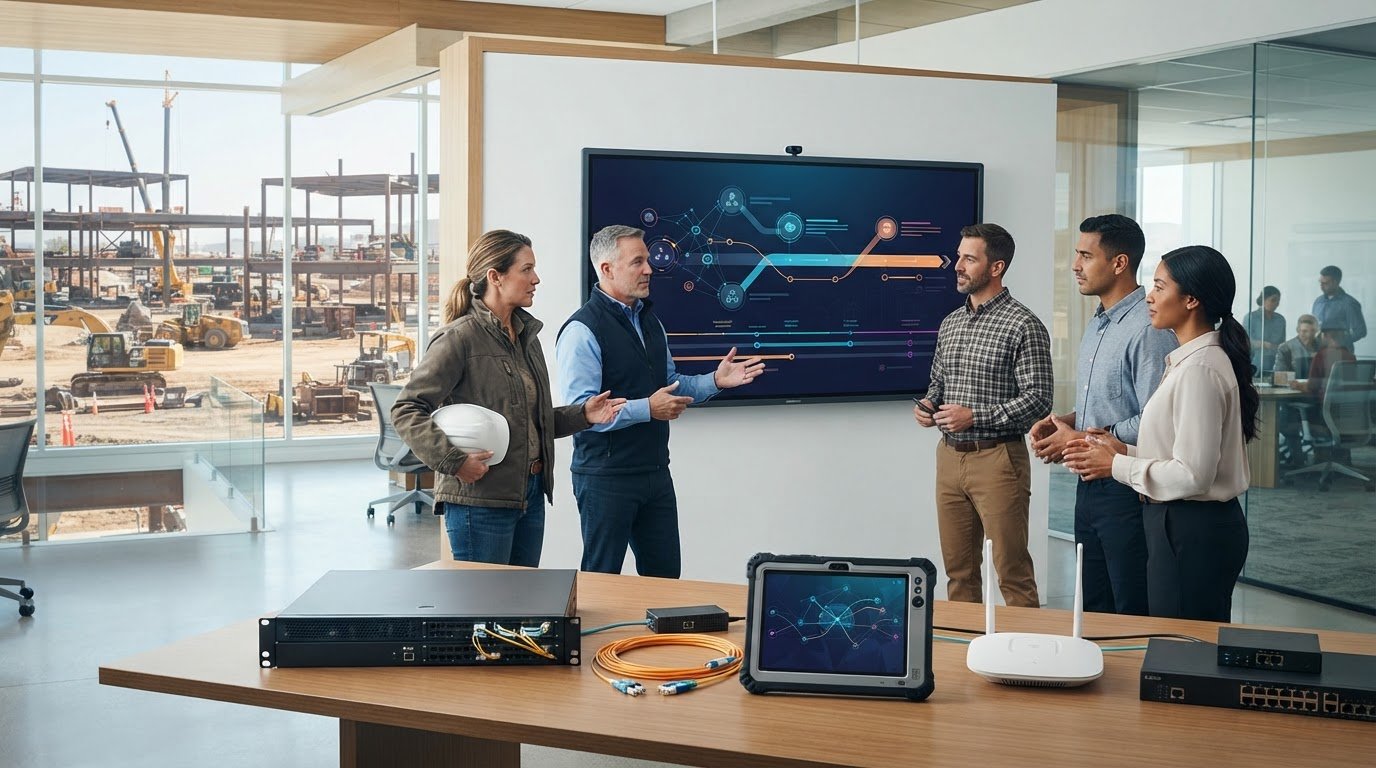
What if your next technology decision made a project harder to run? For construction firms, developing a 3-year technology plan means connecting office systems, jobsite access, and business priorities without disrupting active work.
Technology choices often happen in response to an immediate problem. Meanwhile, office teams and field crews need reliable access to project information and the systems that support daily work. A new site, relocation, or change in project requirements can also make a fixed roadmap feel out of date.
A practical plan gives your business clear priorities and room to adjust. This guide explains how to connect technology decisions to construction operations, sequence systems and infrastructure work across three years, and assign responsibility for keeping the plan current. The goal is a roadmap your team can act on, not a list of purchases that waits for the next urgent issue.
• Developing a 3-year technology plan starts with documenting the systems, workflows, connectivity gaps, and recurring disruptions that affect construction work.
• Rank technology needs by their effect on operations, security exposure, dependencies, and upcoming project milestones.
• Give each initiative a business owner and technical lead, and record decisions and dependencies so teams know what happens next.
• Review the roadmap at planned intervals and when project sites, staffing, or operational needs change.
Construction technology decisions affect more than the office. Network access can determine whether project teams can reach plans, share updates, and coordinate work from active jobsites. A construction technology plan sets a prioritized sequence of decisions over three years, tied to business goals, project demands, and the systems crews rely on. It gives leaders a shared basis for deciding what needs attention now and what can wait.
Reactive upgrades can solve one immediate problem while creating another. An office may move to a new system without accounting for how field staff access project files. A rushed network change can also interrupt access during active work. Developing a 3-year technology plan helps teams identify dependencies before changes reach the jobsite, then schedule work around project needs instead of waiting for a disruption.
A technology roadmap connects technology choices to intended outcomes. For construction businesses, that means planning around office-to-field connectivity, project workflows, data protection, and site changes. Trinity Networx, LLC brings construction-focused planning to these decisions, with its IT services supporting the office systems construction teams depend on.
Start with the technology that keeps project information moving and accessible. Include jobsite network access, office-to-field connectivity, data protection, and the setup required for new construction environments. When addressing complex networking or cybersecurity needs, consulting and training partners like Insoft Services can help teams build the technical skills required to support critical infrastructure. Then separate ongoing needs, such as maintaining access to business systems, from changes triggered by a relocation, a new project, or workforce shifts. This distinction helps teams plan routine support alongside project-driven work.
Construction expertise matters when timing and site conditions affect what can change. Learn about construction-focused IT planning from Trinity Networx, LLC.
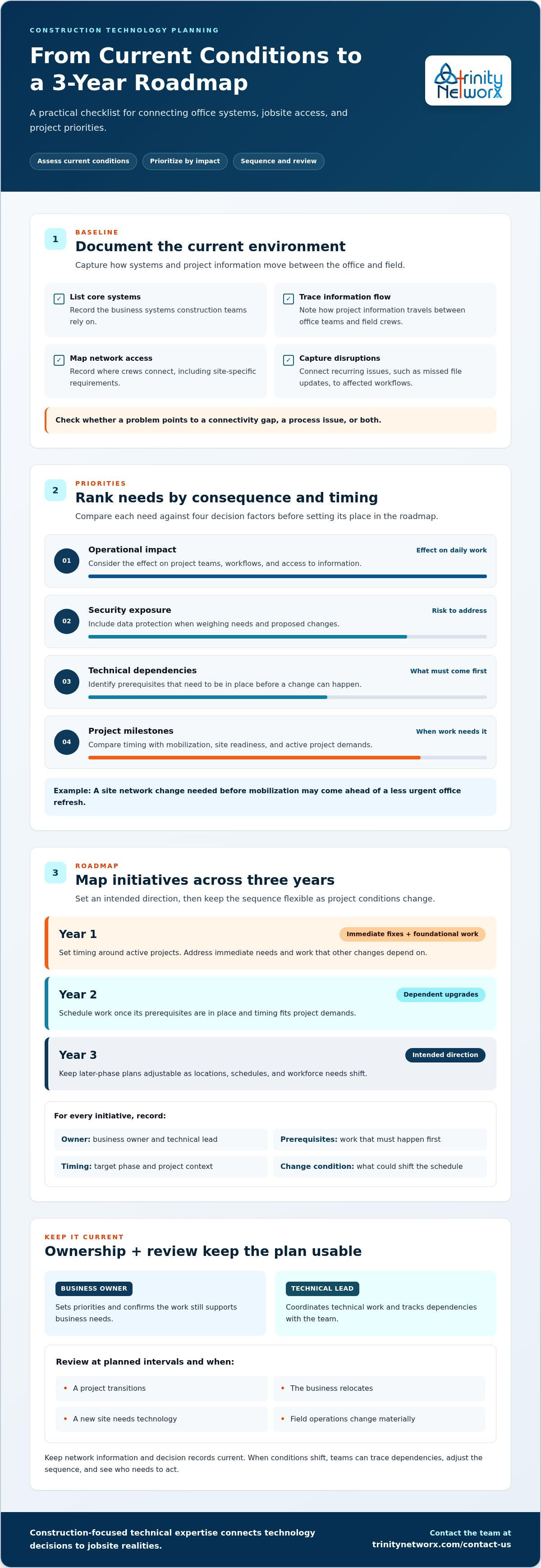
Turn priorities into a sequence your project teams can work with. Developing a 3-year technology plan starts with an honest picture of current conditions, then connects each proposed change to operational risk, project timing, and the work it depends on.
Record core systems, how project information moves between the office and field, and where crews connect to networks. Note recurring disruptions and the workflows they affect. A missed file update, for example, may point to a connectivity gap, a process issue, or both. Include site-specific details so a setup used at one location is not assumed to fit every jobsite.
Compare each issue by its operational impact, security exposure, technical dependencies, and relationship to upcoming construction milestones. A site network change needed before mobilization may outrank a less urgent office refresh. Construction-focused IT planning and support can connect infrastructure decisions to field requirements.
For every proposed change, record a business owner, technical lead, prerequisites, and the condition that could shift its timing. For example, a network upgrade may depend on a relocation date or site readiness. Make those dependencies visible before assigning a target phase.
Use year one for immediate fixes and foundational work, with timing set around active projects. Schedule dependent upgrades in later phases, once prerequisites are in place. Years two and three should show the intended direction, not a fixed promise: project schedules, locations, and workforce needs can change. Revisit assumptions as work shifts, then adjust the sequence without losing sight of business priorities.
A construction-aware technical partner can help assess dependencies and plan changes around field operations. See how Trinity Networx, LLC approaches construction technology planning.
A roadmap needs owners, decisions, and follow-through. Assign each initiative a business owner who can set priorities and a technical lead who can coordinate the work. Record the decision, dependencies, target timing, and any condition that could change the schedule. If a new site opening shifts network work, the team can see which tasks move with it and who needs to act.
Use planned reviews to check progress, resolve stalled decisions, and revise priorities. Trinity Networx, LLC supports commercial construction IT and technology project planning, connecting technical decisions to construction operations. Developing a 3-year technology plan is ongoing work, not a promise that every date will stay fixed.
Review the roadmap at set intervals and when a project transitions, a business relocates, a new site needs technology, or field operations change materially. Bring the business owner and technical lead together to compare the plan with current project demands. Keep written network information and decision records current so teams can trace dependencies instead of rebuilding context each time. Trinity Networx, LLC’s IT services connect construction technology needs with the wider office environment.
A roadmap grounded in jobsite realities accounts for site requirements as well as office systems. Explore construction technology planning with Trinity Networx, LLC.
The next project award, site move, or change in crew requirements can put your technology priorities to the test. Use that moment to check whether planned work still supports the way teams need to operate. Developing a 3-year technology plan gives leaders a clear basis for adjusting course while keeping ownership of important decisions.
Trinity Networx, LLC brings construction-focused IT planning to office-to-field connectivity, backed by 24 × 7 × 365 remote network monitoring. Written network documentation and quarterly review meetings help keep technology decisions visible as business needs shift. Your roadmap can stay practical, accountable, and connected to the work ahead.
Contact the Trinity Networx, LLC team to discuss your construction technology plan. Build a roadmap around how your business and jobsites operate.
A business leader should sponsor the plan, while a technical lead coordinates assessment and delivery. Include a project operations representative in decisions that affect crews, mobilization, or site access. This split keeps developing a 3-year technology plan tied to business priorities without asking field supervisors to own technical dependencies. Name a backup decision-maker too, so approvals do not stall when schedules shift.
Choose review points that match construction rhythms, such as before mobilization, during a major site transition, and after closeout. Between those checkpoints, flag changes that affect connectivity, staffing, or access to project information. For firms with projects across California, Nevada, Arizona, and Utah, compare site conditions rather than assuming one location’s setup will fit every project.
Yes. Treat each temporary jobsite as a defined technology setup with an opening, operating, and closeout phase. Note what crews need to access, what connectivity the site depends on, and which equipment or accounts must be removed or reassigned when work ends. This makes temporary site needs visible without confusing them with permanent office infrastructure.
First identify the cause and which later work depends on the delayed project. Reassess operational risk, then decide whether to resequence tasks, revise the target date, or use a temporary work arrangement. Record the decision and its owner so teams share the same expectations. For help assessing construction-specific dependencies, talk with Trinity Networx, LLC.

Article by
Lance Reichenberger, Ph.D.., J.D. (Candidate)
Dr. Lance Reichenberger is the founder of Trinity Networx, a Southern California technology firm specializing in managed IT services, cybersecurity, network infrastructure, and business technology strategy. With nearly four decades of experience in the IT industry, he works with businesses to improve operational efficiency, strengthen security, and align technology with long-term growth objectives.
Lance focuses on proactive IT management, enterprise wireless infrastructure, cybersecurity integration, and scalable technology solutions for growing organizations throughout Southern California.
The content published on this website is provided for general informational and educational purposes only. Articles may be created, edited, or enhanced with the assistance of artificial intelligence and automation tools under the direction and review of Trinity Networx. While every effort is made to ensure accuracy and relevance, the information provided should not be considered professional, legal, financial, cybersecurity, or technical advice specific to your organization. Businesses should consult directly with a qualified professional regarding their unique environment, compliance requirements, and operational needs. Trinity Networx makes no warranties regarding completeness, reliability, or applicability of the information contained within these articles.
Schedule a brief conversation with Trinity Networx to discuss your business technology needs.
Get a practical roadmap built around your business, your users, your systems, and the technology issues that need attention first.
Put the right technology, support, security, and infrastructure in place so your business can grow, adapt, and move forward with confidence.