3281 E. Guasti Rd, STE 700, Ontario, CA 91761
1712 9th Ave SW, Watertown, SD 57201
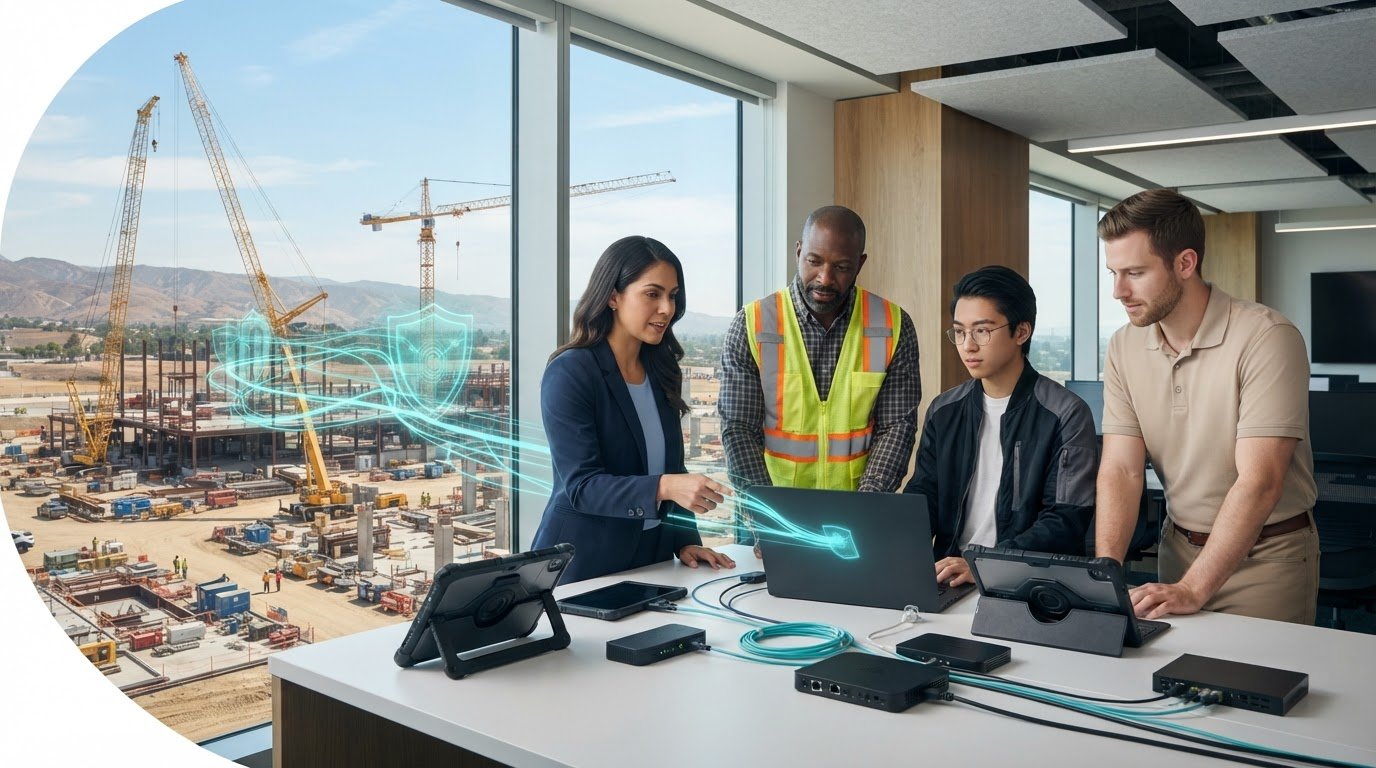
What good is a CMMC plan if it protects the office but leaves project data exposed across field devices, jobsite connections, and subcontractor workflows? Construction contractors need security planning that reflects how work moves between the office and the field. When searching for a local CMMC consultant near me, look for construction technology experience, not just a general IT checklist.
Compliance work can feel disruptive when staff are focused on active projects. A useful starting point is to map where contract information is handled, which teams and systems use it, and how field staff connect to office resources. That picture helps connect security work to existing technology and daily routines.
This guide explains how to evaluate local CMMC support, connect security planning with construction operations, and keep field and office technology aligned. It also covers the difference between consulting, cybersecurity services, software tools, and formal assessment.
• Map where contract information moves across construction offices, jobsites, devices, and business systems before planning security work.
• Evaluate a local CMMC consultant near me by the fit between the technical work, documentation, ongoing support, and construction experience.
• Distinguish compliance software, cybersecurity services, consulting support, and formal assessment when deciding what help your team needs.
• Include office-to-field connectivity in technology planning so security work supports construction operations.
A CMMC consultant helps a contractor understand which security and documentation work applies to its defense contract activity, then plan how to address it across the company’s technology. The Cybersecurity Maturity Model Certification (CMMC) program concerns the protection of contract information. The practical work involves the systems people use, not just a policy document.
For a construction firm, project information may pass between office staff, project teams, jobsites, and business systems. Drawings, schedules, and contract files can move across devices and connections as work progresses. A local CMMC consultant near me should understand those handoffs and how they relate to the company’s technology, so security planning fits actual operations.
Construction teams coordinate from changing locations. Field staff may need access to office resources while project managers, estimators, and administrators keep work moving from headquarters. Gaps in connectivity or differences between jobsite and office setups can make coordination harder and security practices less consistent.
Construction-focused IT planning brings those workflows into the conversation. Trinity Networx, LLC provides technology planning and office-to-field connectivity for construction environments, connecting security work to the systems teams rely on. Consulting and formal assessment are separate roles: a consultant can help plan and address security work, but does not confer CMMC status. Formal assessment is performed through the program’s designated assessment process when applicable.
Learn how construction IT services connect technology planning with jobsite operations, or find Trinity Networx, LLC contact information.
Look beyond the pitch and compare the work being proposed. A local CMMC consultant near me should explain how security planning relates to your contract work, construction systems, and day-to-day coordination. The plan should account for the technology handling contract information and the connections between office staff, project teams, and field locations.
| Area | What to look for |
|---|---|
| Project scope | Defined work, deliverables, responsibilities, and priorities. |
| Technical work | Attention to the systems and connections your teams actually use. |
| Documentation | Clear records of completed work, open issues, and next steps. |
| Ongoing support | A plan for maintaining security work as technology and projects change. |
| Construction experience | Familiarity with office-to-field connectivity and jobsite technology. |
Keep the roles distinct. A software tool can support specific tasks, but it does not replace decisions about your systems or workflows. A cybersecurity service may implement or maintain protective measures. A consultant advises and supports CMMC-related security and documentation work. A formal assessor conducts an assessment through the program’s assessment process; consulting support is not an assessment or certification. The Department of Defense’s CMMC Model Overview provides model information.
In a planning discussion, cover field connectivity, office systems, and how project information moves between teams. Clarify the proposed deliverables, task owners, and ongoing support after initial work. The answers should link security actions to construction operations, with responsibilities clear enough that staff know what will change and who will handle it.
Trinity Networx, LLC brings construction technology planning and office-to-field connectivity into CMMC support. Discuss your construction technology and CMMC needs.
Useful CMMC support starts with how your construction business works, not with a generic technology checklist. The team needs to understand where contract information moves, how office systems connect to field operations, and which technology gaps could complicate security work. The CMMC for Federal Contractors resource from the Associated General Contractors of America provides construction-sector context for firms handling federal work.
A practical sequence keeps the work tied to daily operations:
Map how project teams, office staff, devices, and jobsite connections work together.
Locate the systems and connections involved in handling contract information.
Set priorities and responsibilities that fit the company’s technology and operating schedule.
Keep security and IT work aligned as projects, equipment, and team needs change.
Trinity Networx, LLC connects construction technology planning and office-to-field connectivity with CMMC support. This matters when field teams need access to office resources while project work continues. Security planning should reflect the connections construction teams use, rather than treat jobsite operations as an afterthought.
Construction IT planning and field connectivity belong in the same discussion as CMMC compliance consulting for defense contractors. Security planning needs to account for the technology supporting project teams, as well as documentation.
For construction-focused CMMC support shaped around your technology environment, discuss construction-focused CMMC support with Trinity Networx, LLC.
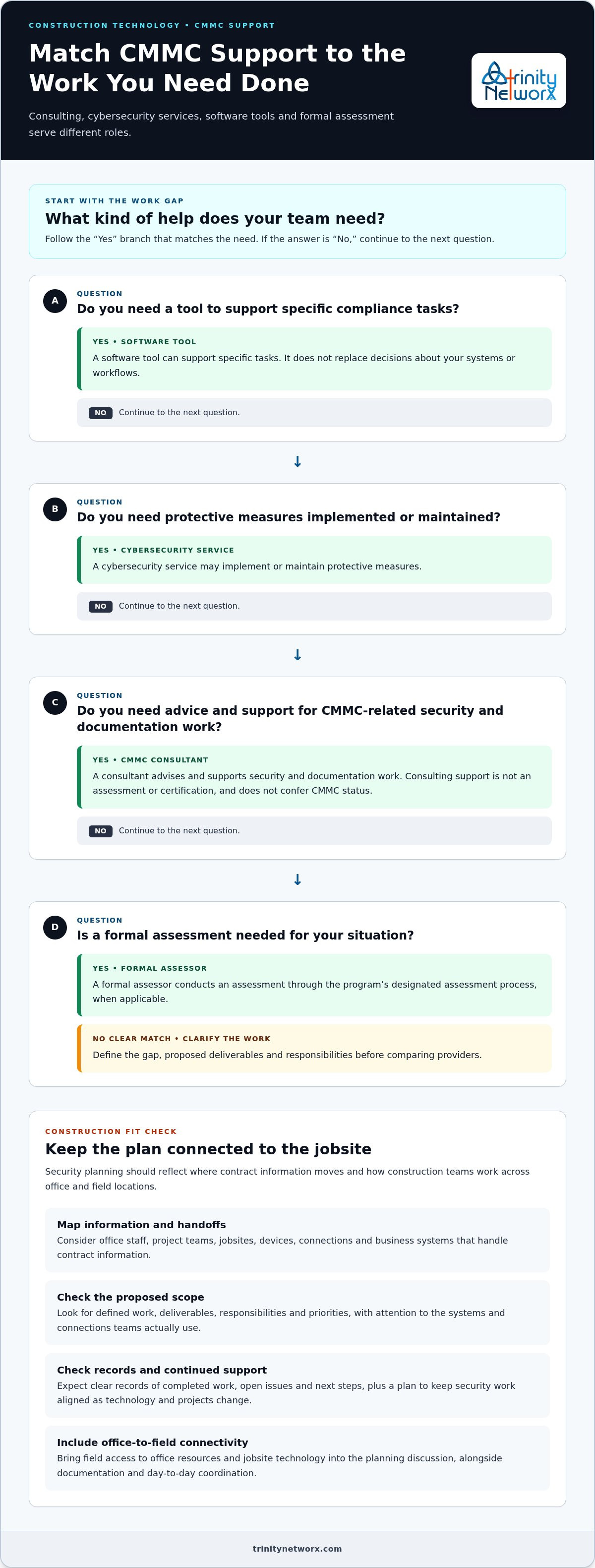
Choosing a local CMMC consultant near me is about more than proximity. The right support connects security and documentation work to the systems your construction teams use, from office technology to field connectivity. Compare the scope, technical work, documentation practices, and ongoing support, while keeping consulting distinct from formal assessment.
Construction-focused IT planning makes that connection practical. Trinity Networx, LLC supports office-to-field connectivity and technology planning for construction operations. Based in Southern California, the team serves businesses across California, Nevada, Arizona, and Utah.
To connect security planning with the technology that keeps projects moving, contact the team about construction-focused CMMC support.
Look for CMMC support that accounts for construction workflows, including office systems, field connectivity, and the movement of project information. Trinity Networx, LLC provides construction-focused IT planning and CMMC support from Southern California, serving businesses across California, Nevada, Arizona, and Utah. Start with a discussion of your contract work, technology environment, and operational needs.
Yes. A consultant can connect security planning and documentation work to the systems your teams use across offices and jobsites. For example, planning can account for how field staff connect to office resources and how project information moves between teams. Construction-focused IT expertise keeps that work grounded in daily operations.
Compare the proposed scope, technical work, documentation practices, ongoing support, and construction experience. Look for clear deliverables and responsibilities, plus an explanation of how the work relates to your systems and field connectivity. A useful plan addresses operational needs as well as security tasks, so staff understand what changes and how support continues.
No. Consulting support and formal assessment are distinct roles. A consultant can help a contractor understand and address security and documentation work, while a formal assessment is conducted through the program’s designated assessment process when applicable. Consulting can support preparation, but it does not itself provide an assessment result or establish a contractor’s CMMC status.

Article by
Lance Reichenberger, Ph.D.., J.D. (Candidate)
Dr. Lance Reichenberger is the founder of Trinity Networx, a Southern California technology firm specializing in managed IT services, cybersecurity, network infrastructure, and business technology strategy. With nearly four decades of experience in the IT industry, he works with businesses to improve operational efficiency, strengthen security, and align technology with long-term growth objectives.
Lance focuses on proactive IT management, enterprise wireless infrastructure, cybersecurity integration, and scalable technology solutions for growing organizations throughout Southern California.
The content published on this website is provided for general informational and educational purposes only. Articles may be created, edited, or enhanced with the assistance of artificial intelligence and automation tools under the direction and review of Trinity Networx. While every effort is made to ensure accuracy and relevance, the information provided should not be considered professional, legal, financial, cybersecurity, or technical advice specific to your organization. Businesses should consult directly with a qualified professional regarding their unique environment, compliance requirements, and operational needs. Trinity Networx makes no warranties regarding completeness, reliability, or applicability of the information contained within these articles.
Schedule a brief conversation with Trinity Networx to discuss your business technology needs.
Get a practical roadmap built around your business, your users, your systems, and the technology issues that need attention first.
Put the right technology, support, security, and infrastructure in place so your business can grow, adapt, and move forward with confidence.